Key Points
- Myofascial release uses slow, gentle hand pressure on the connective tissue around your muscles, and many people find it milder than deep tissue work.
- Cupping uses suction on the skin and typically leaves round, red marks that fade within a week or two.
- Early research on both is encouraging but limited, so each is best treated as a complement to massage, not a cure.
- Cupping is not right for everyone, including pregnant clients and people with certain skin, blood, or heart conditions.
- Both can be booked at home with Inside Out Mobile Spa, alone or combined within a customized session.
Spend enough time hunched over a laptop or stuck in traffic on the 405, and you end up with a familiar problem: one tight spot that stretching and a foam roller never quite reach. When people scan a massage menu for something more targeted, two terms tend to stand out: cupping & myofascial release. Both sound intriguing, and both raise fair questions about what they feel like, what they leave behind, and whether the science backs them up.
Inside Out Mobile Spa answers those questions in plain language: what each technique is, what the research says (including where it falls short), who should skip them, and how to choose between them for your own body.
What Is Myofascial Release, and What Does It Feel Like?
Myofascial release is a hands-on technique that focuses on fascia, the thin connective tissue that wraps and supports your muscles. According to Mayo Clinic, a therapist uses light hand pressure to find stiff areas, often called trigger points, and works on them to ease the tension that builds around them. Picture the webbing around the segments of an orange: when one section gets tight and sticky, it can limit how freely the tissue around it moves.
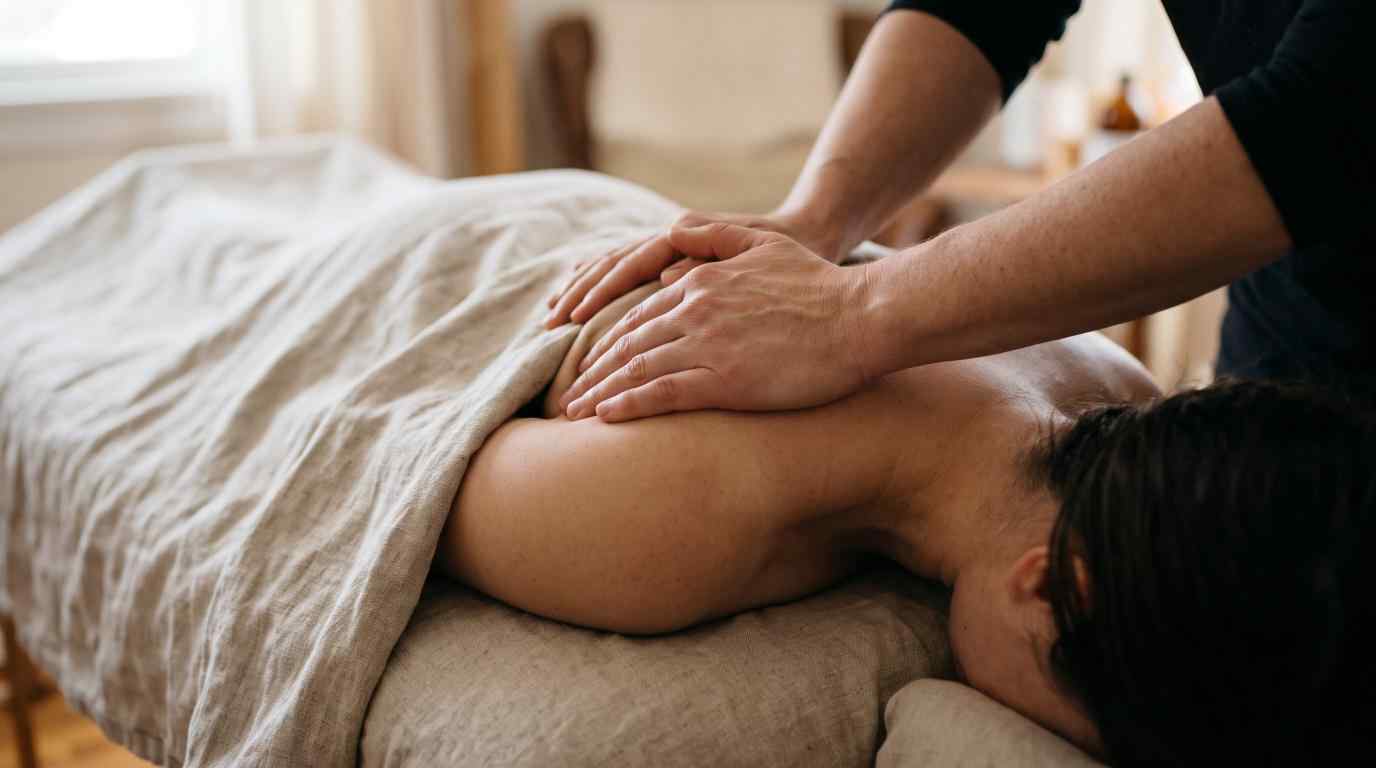
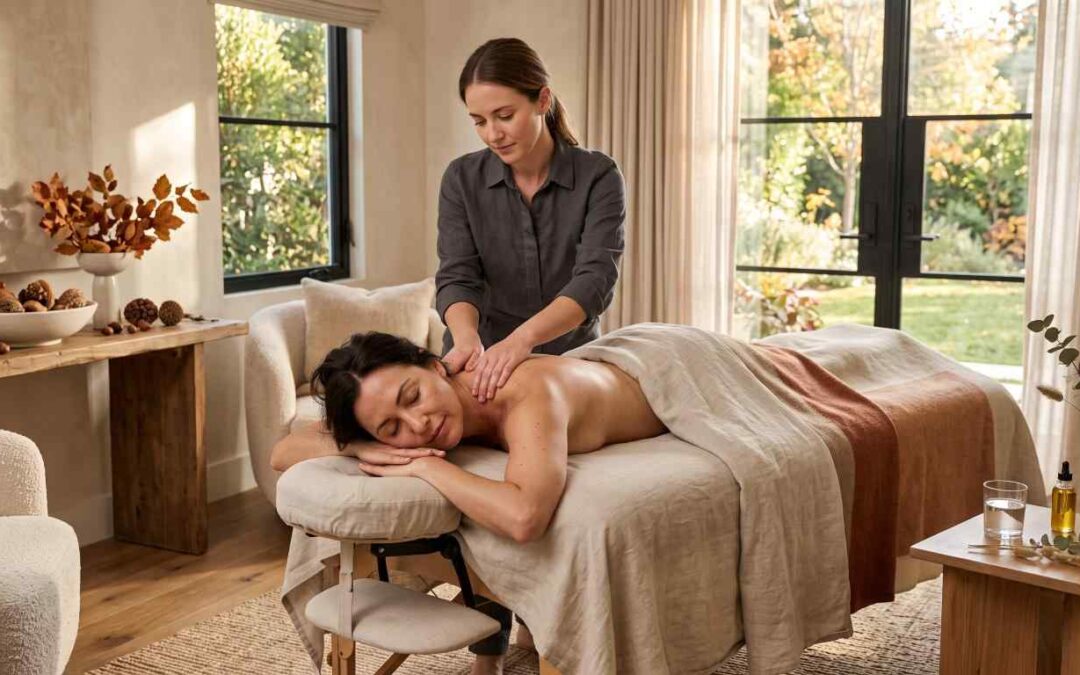
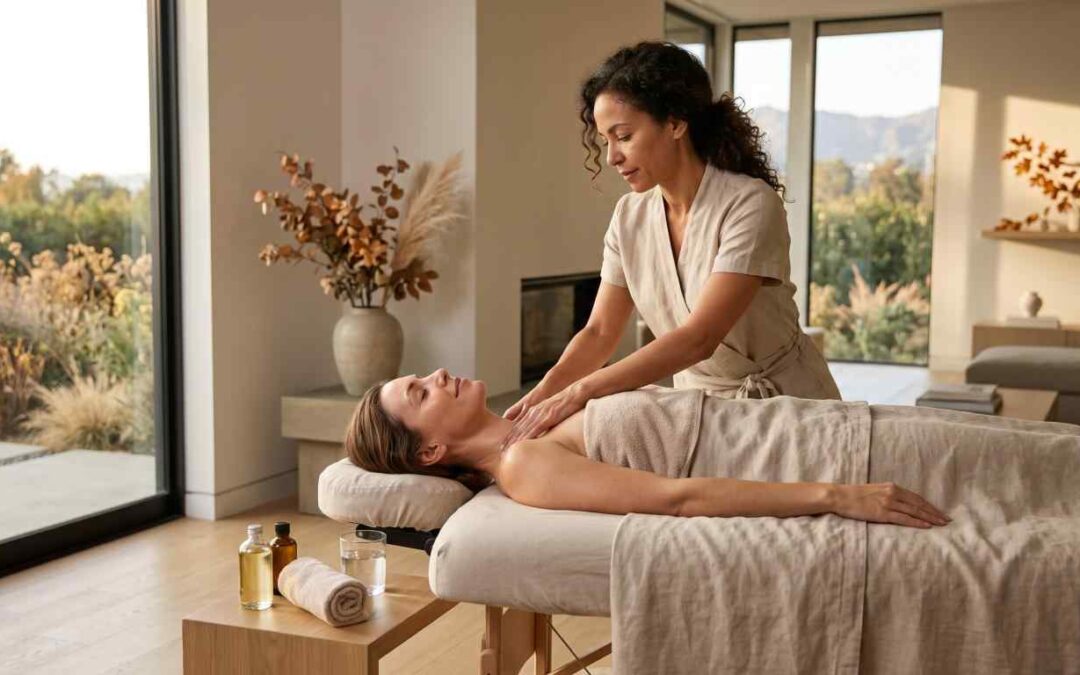
Expect something slower and gentler than most people assume. Rather than kneading or pressing hard, the therapist typically holds sustained, light pressure on one area for a while, which many people find milder than a deep tissue session.
What Is Cupping, and Why Does It Leave Marks?
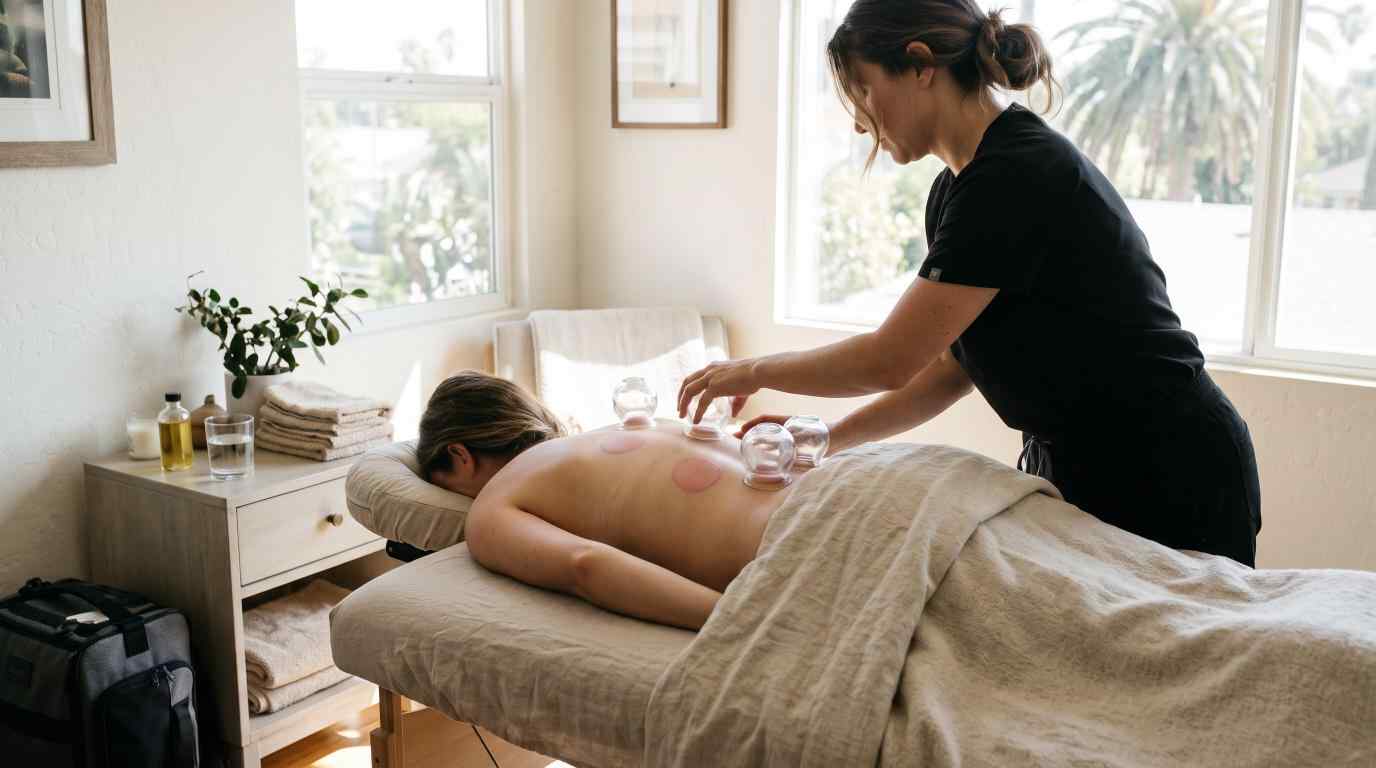
Cupping is a traditional practice that places cups, made of glass, ceramic, bamboo, or plastic, on the skin to create suction, as the NIH’s National Center for Complementary and Integrative Health explains. The suction comes from heat or from a small pump. In dry cupping, the skin isn’t pierced. In wet cupping, it is, and blood is drawn into the cup. Cleveland Clinic also describes running cupping, where oil is applied and the cups glide across the skin.
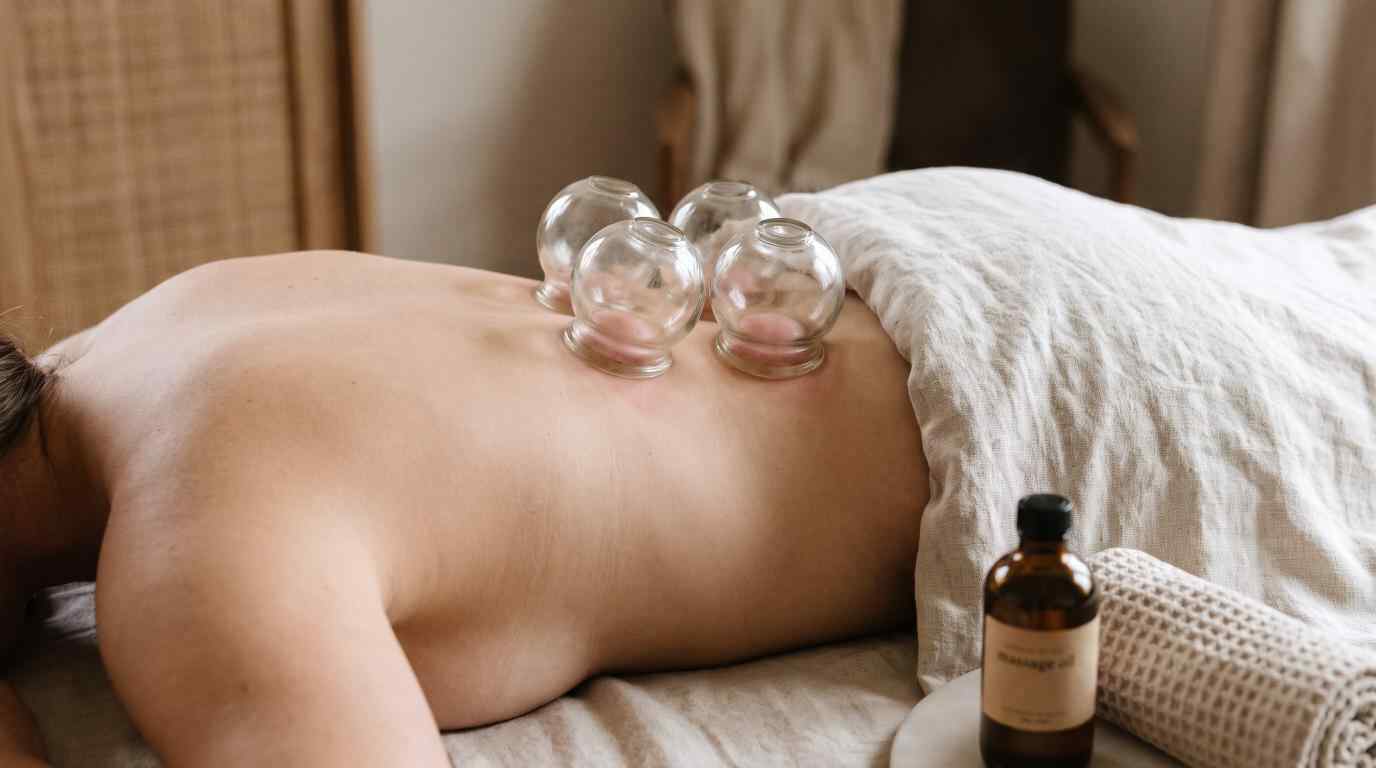
That suction pulls skin and blood toward the surface, which is why cupping leaves round, red marks. Cleveland Clinic notes that they resemble bruises but aren’t true bruises that injure muscle fibers, and they should fade in a week or two. NIH adds that the marks are temporary, and worth explaining to any other healthcare provider so they aren’t misread.
Does the Research Back Them Up?
Partly, and it’s better to say so plainly. For myofascial release, a 2021 systematic review and meta-analysis of eight randomized trials with 375 people found significant improvements in pain and physical function for chronic low back pain. The authors also described the included studies as small and low quality, and Mayo Clinic points out that few studies have tested the technique specifically and that results vary by therapist.
For cupping, the NIH says it may help reduce pain, but the evidence isn’t very strong, and most of the research is low quality. Cleveland Clinic calls the evidence mixed and says most providers recommend cupping as a complement to other care, not on its own. The fair summary: both techniques show encouraging early signals and real limits. Neither is a cure, and a thoughtful bodywork specialist won’t present them as one.
Which One Fits Your Body and Your Goals?
The choice usually comes down to what you’re feeling and what you’re comfortable with.
- Choose myofascial release if you have a specific stiff area, such as the neck, upper back, or hips, and want targeted work without heavy pressure.
- Consider cupping if you carry broader tension in the back or neck and don’t mind temporary marks. Cleveland Clinic lists back, neck, and knee pain among the problems cupping may ease.
- Combine them if you want both: myofascial work to release a tight area, with cupping layered in as an enhancement.
If this is your first time with either one, start with myofascial release or tell your therapist it’s your first visit. A good therapist will adjust to you rather than follow a script.
Who Should Skip Cupping or Check With a Doctor First?
This is the section not to skim. Cleveland Clinic advises that cupping isn’t appropriate for people who are pregnant or who have anemia, a pacemaker, a bleeding disorder, clotting problems (including DVT or a history of stroke), cardiovascular disease, eczema, psoriasis, or epilepsy. The NIH also warns that cupping can worsen eczema or psoriasis, and that possible side effects include burns, scarring, and infection.

Tell your therapist about your skin, your medications, and any pregnancy before a session, and check with your doctor if you’re unsure. It’s also fair to ask any provider how their equipment is cleaned, since shared, unclean equipment is a documented risk. Our services are a wellness experience and not a substitute for medical care.
Can You Combine Them, and What Does It Cost?
Yes. At Inside Out Mobile Spa, myofascial release is offered as its own service starting at $195 for a 60-minute session, and cupping is available as an enhancement to a massage. Session lengths are 60, 75, or 90 minutes, and your exact price depends on your ZIP code, with cupping confirmed when you book. Gratuity isn’t included and is left to your discretion. Browse the full massage menu and enhancements to see how they fit together.
What This Looks Like in Practice
Here’s how those choices tend to play out, using a few composite examples.
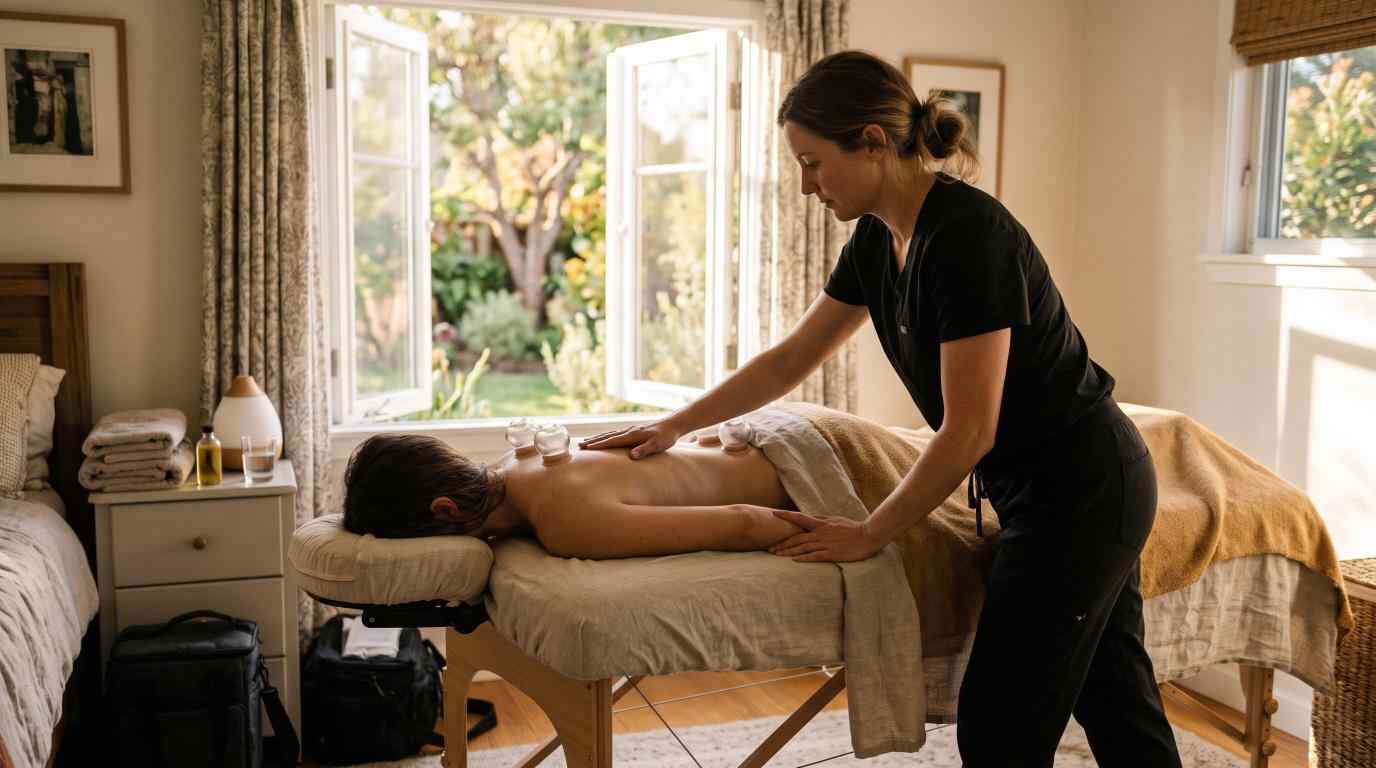
A product designer in Silver Lake with a stubborn knot between her shoulder blades books myofascial release after work. Because it happens at home, she can rest in her own bed afterward instead of sitting through another commute.
A weekend hiker who spends Saturdays on the Griffith Park trails books a 90-minute session for tight hips and lower back, with cupping added to the larger muscle areas.
A client with a wedding in two weeks asks for cupping across her back. Her therapist suggests moving it earlier in the month, since marks can take a week or two to fade, or choosing myofascial release instead.
Amanda’s Advice for First-Timers
Amanda Deming, founder of Inside Out Mobile Spa, trained at National Holistic Institute with more than 2,000 hours spanning Eastern modalities like cupping and Western ones like myofascial release, which is why she’s cautious about rushing either one. Her advice is simple. Share your health history and any skin conditions upfront. Speak up about pressure in the first few minutes, since lighter is always an option. Drink water afterward. And book cupping a couple of weeks ahead of any event where visible marks would bother you.
Conclusion
The best way to choose between cupping & myofascial release isn’t to follow a trend; it’s to match the technique to how you want to feel afterward: loosened and unwound, or worked at a broader level, or both. Either one tends to do its best work as part of a steady routine rather than a one-off fix, and doing it at home means no rush back into traffic with fresh marks or a sore back.
Inside Out Mobile Spa brings customized bodywork to your door, wherever you are, backed by a 4.7-star rating on Google. Call or text 818-450-6778, or book online, and tell us which technique you’re curious about.