Key Points
- Fall brings a real, physical shift, out of an active summer and back into routine, shorter days, and for many people, a stretch of mild puffiness or sluggishness.
- Lymphatic massage supports the body’s natural fluid balance and drainage processes, though it isn’t a medical detox treatment or a guaranteed fix.
- The lymphatic service offered here uses a non-invasive ultrasonic tool, which is different from traditional hands-only manual lymphatic drainage, and it’s worth knowing that distinction before booking.
- This pairs well with deep tissue work rather than replacing it, since the two target different things.
- This is part two of an ongoing seasonal series that started with the Spring Equinox Reset.
The Spring Equinox Reset post was about waking the body back up after winter. Fall asks for the opposite. Summer’s looser schedule, the travel, the late nights, the extra hours outdoors, all give way to routine again as daylight shortens, and right around this transition, a lot of people notice a stretch of mild puffiness or low-grade sluggishness they can’t quite place. Even in Los Angeles, where fall rarely brings the dramatic weather shift much of the country deals with, the body still registers the change in routine and daylight.
That’s usually when lymphatic massage for fall comes up, sometimes as a genuine question, sometimes as a term people have seen mentioned without ever getting a straight answer on what it actually is. This guide covers what it does, what makes the version offered here different from what you may have heard about elsewhere, and how it fits into a fall wellness reset routine, as the second entry in this seasonal series.

What Actually Happens to Your Body During the Fall Transition?
Nothing dramatic, but it’s real. Shifting from an active, outdoor-heavy summer back into a fixed routine, combined with shorter daylight hours, tends to bring mild changes in circulation and energy for a lot of people this time of year. Part of the reason comes down to how the lymphatic system actually moves fluid.
Unlike blood circulation, which has the heart acting as a central pump, the lymphatic system relies heavily on muscle movement to keep fluid circulating, and Mayo Clinic’s general guidance on circulation and muscle tension echoes the same basic pattern: movement supports the body’s fluid balance broadly, and the lymphatic system depends on it even more directly. A more sedentary fall routine can mean that fluid moves a little more sluggishly too, which is part of why this time of year tends to bring on that low-grade puffiness. It builds gradually rather than announcing itself, which makes it easy to write off as just feeling off without connecting it back to the season.
What Is Lymphatic Massage, and What Does It Actually Do?
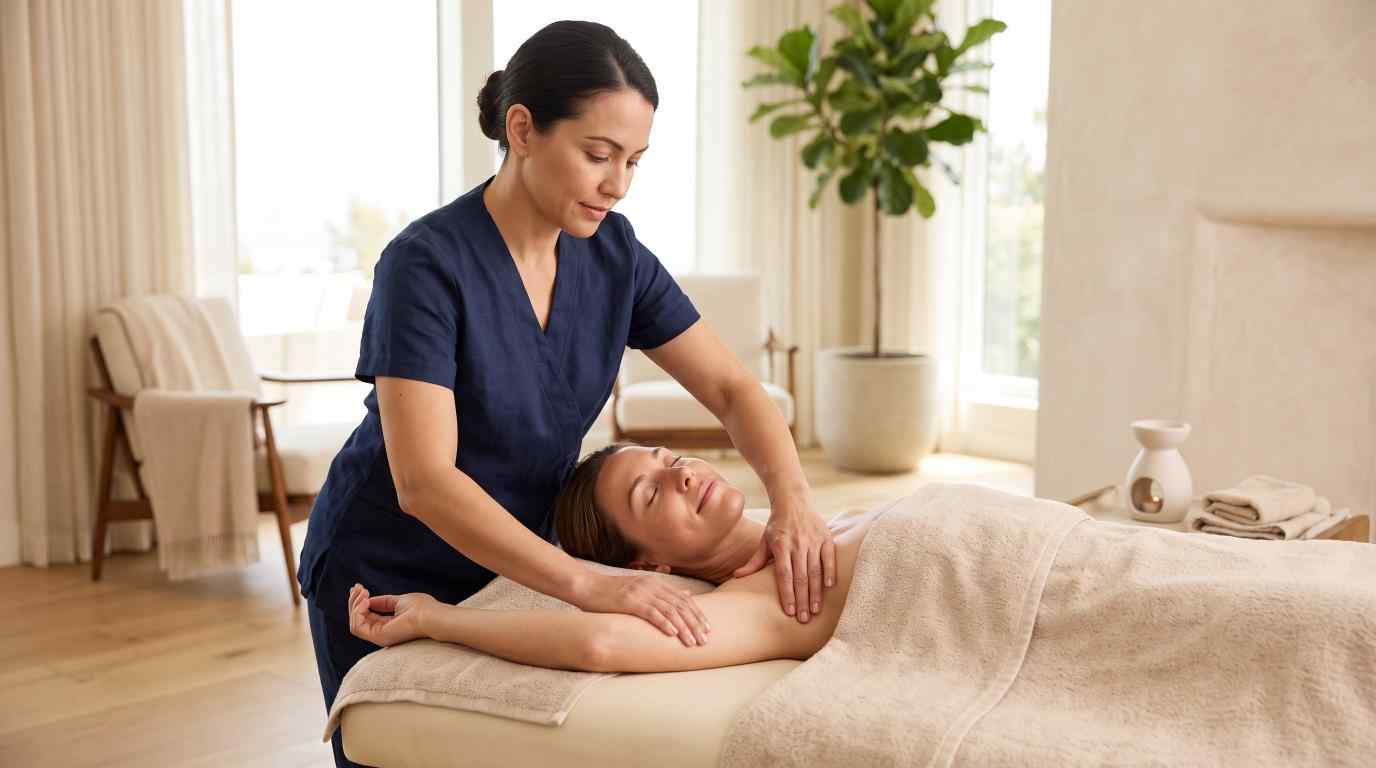
In short, lymphatic massage is a technique aimed at supporting the body’s natural fluid balance and drainage processes, rather than a medical treatment on its own. The lymphatic system helps manage that fluid balance throughout the body, moving fluid through tissue as part of its normal function.
Harvard Health Publishing and the NIH’s National Center for Complementary and Integrative Health both describe massage broadly as something that can support circulation and relaxation, and the American Massage Therapy Association recognizes lymphatic-focused techniques as part of the broader landscape of massage modalities, alongside more familiar styles like Swedish and deep tissue.
This isn’t a medical detox treatment, and it doesn’t remove toxins in a clinical sense. Think of it as supporting a system that’s already doing its job, not replacing or curing anything.
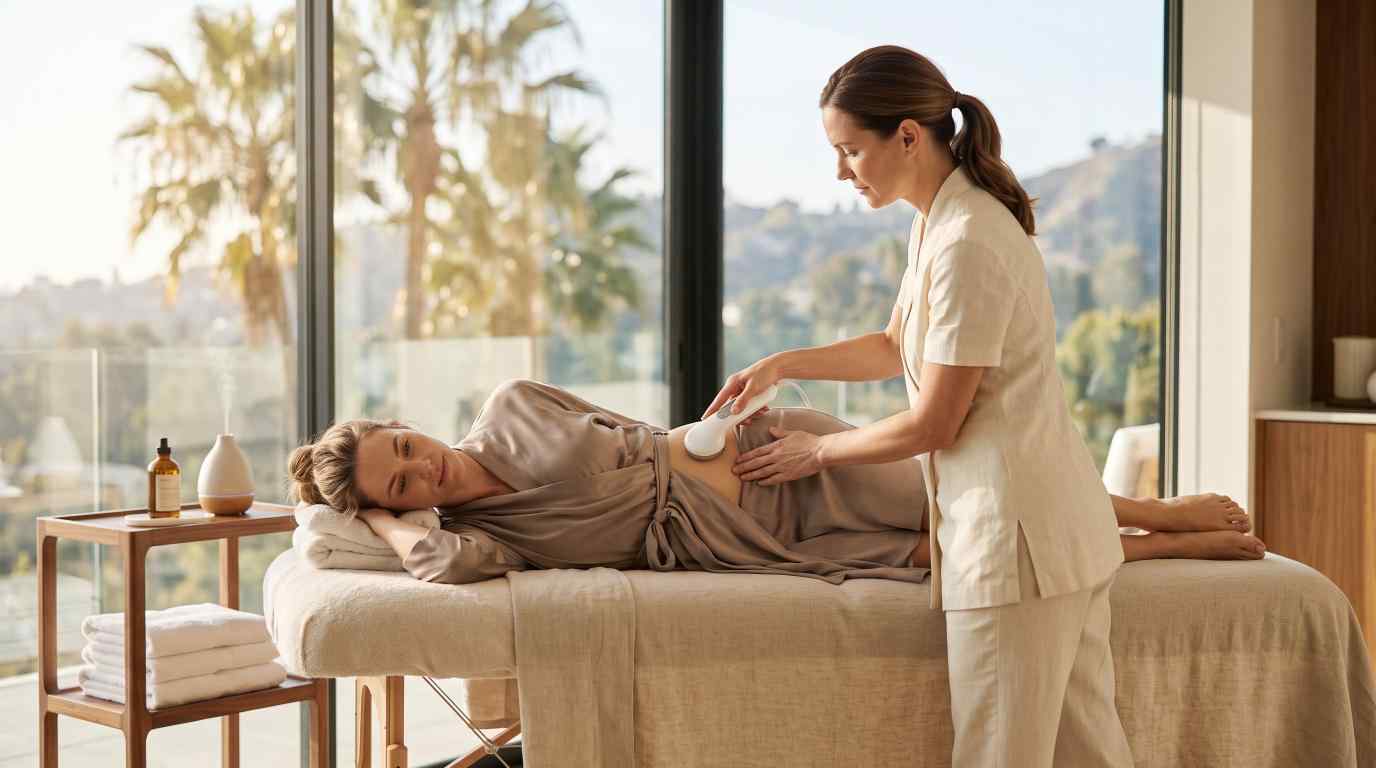
Is This the Same as Traditional Manual Lymphatic Drainage Massage?
Not exactly, and the distinction is worth knowing before you book. Traditional manual lymphatic drainage is a hands-only technique, often used in medical contexts like post-surgical or lymphedema care. The lymphatic service at Inside Out Mobile Spa works differently. It uses a non-invasive ultrasonic tool, low-frequency sound waves applied to the skin that are generally understood to gently stimulate circulation and tissue in the treated area, positioned here as a body contour and wellness service rather than a clinical treatment.
Neither approach is better than the other. They’re simply different tools built for different goals. If you’ve read about manual lymphatic drainage for a specific medical reason, that conversation belongs with a doctor or a lymphedema specialist, not this service. If what you’re after is a gentler, wellness-focused seasonal reset, this is built for exactly that.
What Can You Realistically Expect to Feel During and After a Session?
Compared to deep tissue work, this is a noticeably gentler experience. Most people describe it as relaxing rather than intense. Afterward, it’s common to notice a temporary reduction in puffiness, though results vary from person to person and session to session. As with any wellness service, this isn’t a guaranteed or medical outcome, and it isn’t a substitute for care from a doctor if you have a specific health concern.
Who Tends to Book This in the Fall, and Why?
A few patterns show up every year around this time. People coming back from a summer full of flights and travel often want to feel less puffy and more like themselves again. People settling back into a desk-bound fall schedule after a more active summer often want something gentler than their usual deep tissue session. And clients who already have a standing massage routine sometimes add this in as a seasonal complement rather than a replacement.
How Does This Compare to or Pair With a Deep Tissue Massage?
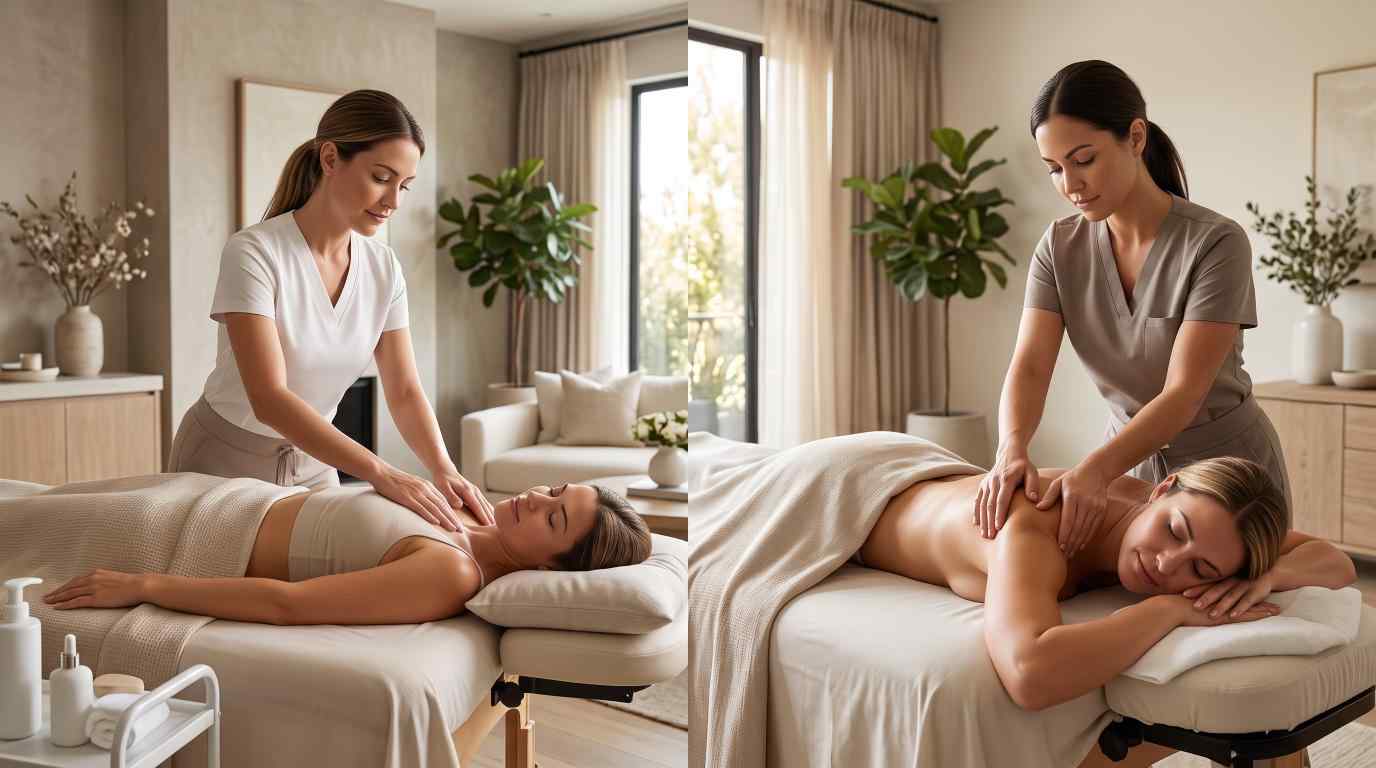
Deep tissue work targets muscular tension directly, with firmer pressure aimed at specific tight spots. This does something different: it’s gentler, more focused on circulation and puffiness than on muscle tension itself. That’s exactly why the two are often booked as complements rather than substitutes: deep tissue for the tension, this for the seasonal reset alongside it.
How Often Should You Book This for the Best Results This Season?
The same logic that runs through the rest of this seasonal series applies here too: think consistency, not a single fix. Many clients build it into a monthly routine through the fall, alongside whatever else is already part of their regular care, rather than treating it as a one-time event. Here’s what that actually looks like for a few different kinds of clients.
What This Looks Like in Practice
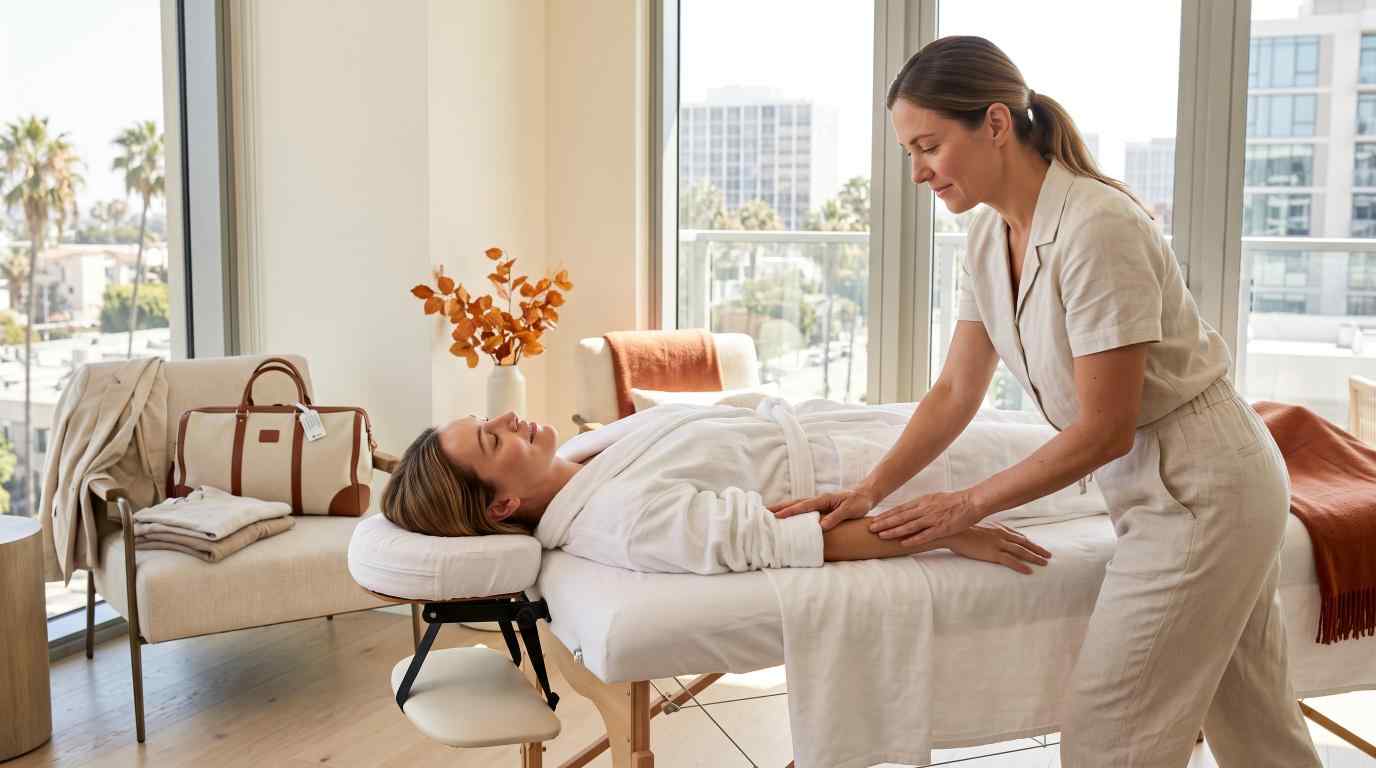
- The post-travel reset. Someone back from a summer of flights and long weekends away books a session hoping to shake off the travel bloat and feel more like themselves again before fall routines fully kick in.
- The back-to-routine client. Someone who spent the summer hiking and outdoors settles back into a desk job in September and wants something gentler than their usual deep tissue session to ease the transition.
- The seasonal add-on. A longtime client who already books monthly deep tissue work adds this in every few months as a lighter, complementary reset rather than swapping out their regular care.
Amanda’s Advice for a Fall Reset
Amanda Deming, founder of Inside Out Mobile Spa, treats seasonal transitions as something to build routine around, not a single fix to chase. Her advice starts with hydration, before and after a session, since that supports whatever the body is already doing with fluid balance. From there, treat it as part of an ongoing seasonal rhythm, similar to the Spring Equinox Reset, rather than a one-time event. And if you’re pregnant, have an active infection, a history of blood clots, or a kidney or heart condition, check with your doctor before booking. That’s standard practice for this kind of bodywork, not a formality to skip.
Conclusion
Fall brings its own version of the reset the Spring Equinox post covered for the other side of the year, less about waking the body up, more about easing the shift out of summer and back into routine. Lymphatic massage isn’t a cure-all, but as a gentle, seasonal complement to whatever else is already part of your care, it’s a reasonable way to mark the transition without waiting for the puffiness or sluggishness to pass on its own.
Inside Out Mobile Spa offers this mobile lymphatic massage as part of our full menu of massage and wellness services, wherever you are in the Los Angeles area. If you found this useful, the Spring Equinox Reset post covers the other half of this seasonal series, and if winter tends to hit you harder than fall does, a separate post on winter sluggishness covers that transition too. Call or text 818-450-6778, or book online to add a seasonal reset to your fall routine.